

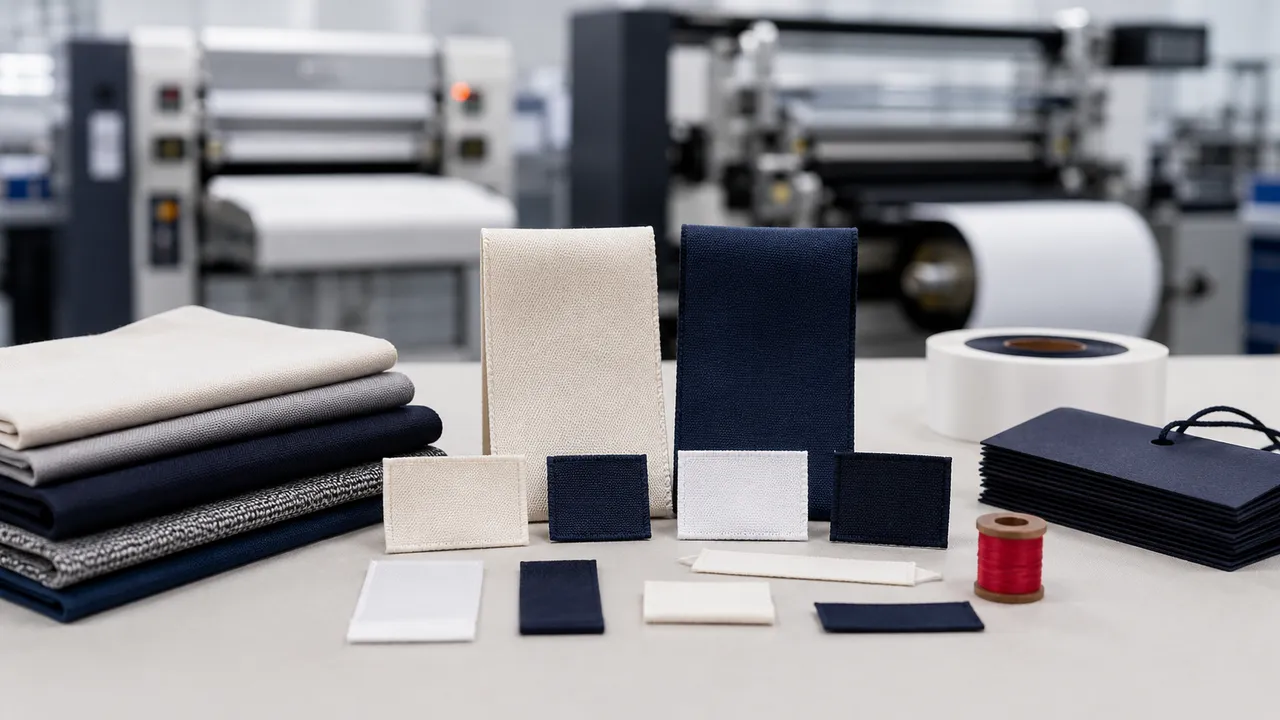
A label sits against the skin all day, so the material it is made of matters. This guide explains what OEKO-TEX certification covers and why apparel brands increasingly require it on labels.
- OEKO-TEX STANDARD 100 tests material against a long list of harmful substances and certifies it is safe for skin contact.
- Neck and care labels are in constant skin contact → this assurance is directly relevant.
- Reduces irritation risk; meets the expectations of EU retailers and conscious consumers.
- Both woven and printed fabric labels can be made on OEKO-TEX certified material.
What OEKO-TEX tests
OEKO-TEX STANDARD 100 tests textile materials for a long list of harmful substances, certifying that the material is safe for human skin contact. For labels — which touch the neck and body — that safety assurance is directly relevant.
Why it matters for labels
Neck and care labels are in constant skin contact. An OEKO-TEX certified label reduces irritation risk and meets the safety expectations of European retailers and conscious consumers.
Woven and printed both qualify
Both woven and printed fabric labels can be produced on OEKO-TEX certified material. Reel Ofset produces labels on OEKO-TEX certified materials — ask for it on your order.
Frequently Asked Questions
What does OEKO-TEX test?
It tests textile material against a long list of harmful substances and certifies it is safe for skin contact (STANDARD 100).
Why does it matter for labels?
Neck and care labels are in constant skin contact; an OEKO-TEX certified label reduces irritation risk and meets safety expectations.
Does it apply to woven labels too?
Yes; both woven and printed fabric labels can be produced on OEKO-TEX certified material.