

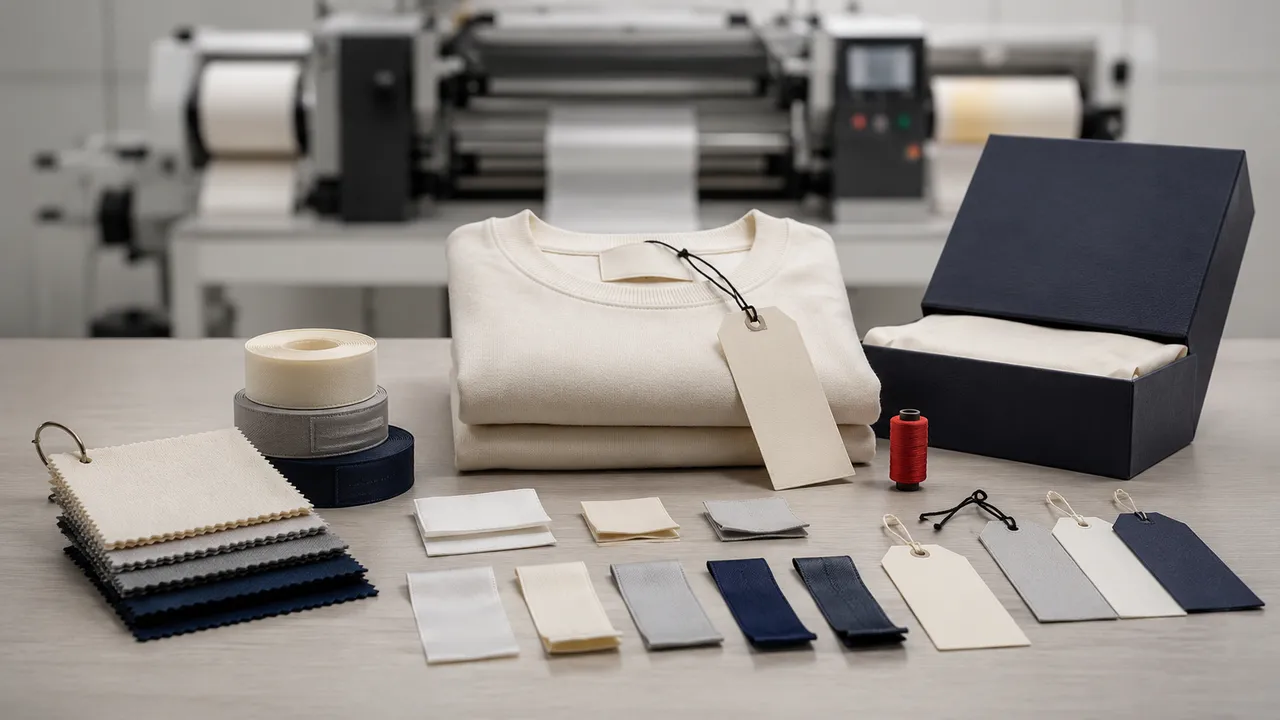
New and growing brands often underestimate labels — until a wrong choice causes returns or a reorder. This guide walks through the decisions so you can brief a supplier with confidence.
- Know the label types: brand/neck (usually woven), care (usually printed), size and hang tag.
- For anything touching the skin, prioritise softness and safety: OEKO-TEX material, soft-woven or satin for neck labels.
- In the EU, fibre composition is required and usually multilingual; care symbols are conventional. You own the content.
- Supplier check: can they produce woven+printed+hang tags together, certified materials, sampling, suitable lead time/flexibility.
Know the label types
- Brand / neck label — your identity; usually woven for a premium feel.
- Care label — wash and composition info; usually printed for dense, multilingual text.
- Size label — often combined with brand or care.
- Hang tag — the paper tag carrying price, story and barcode/QR.
Material & comfort
For anything touching the skin, prioritise softness and safety — choose OEKO-TEX certified material and, for neck labels, soft-woven or satin options. Match durability to how the garment is washed.
Compliance basics
For the EU, fibre composition is required and usually multilingual; care symbols are conventional. You own the content; your supplier reproduces it accurately. (See our EU care label guide.)
A short supplier checklist
- Can they produce woven, printed and hang tags together (consistency)?
- Certified materials (OEKO-TEX, FSC)?
- Sampling before bulk?
- Lead time and flexibility that fit your collection cadence?
Frequently Asked Questions
Which type suits a neck label?
Usually a woven label; it reinforces brand identity with a premium, textured feel.
Which type for a care label?
Usually a printed fabric label; it carries dense, multilingual wash and composition information well.
Which certifications should I look for?
OEKO-TEX for skin contact, and FSC for paper hang tags.